Healthcare organisations around the world continue to grapple with one of the most difficult but essential questions in patient safety: how do we create environments where staff feel safe to report errors, while also maintaining accountability and improving systems of care?
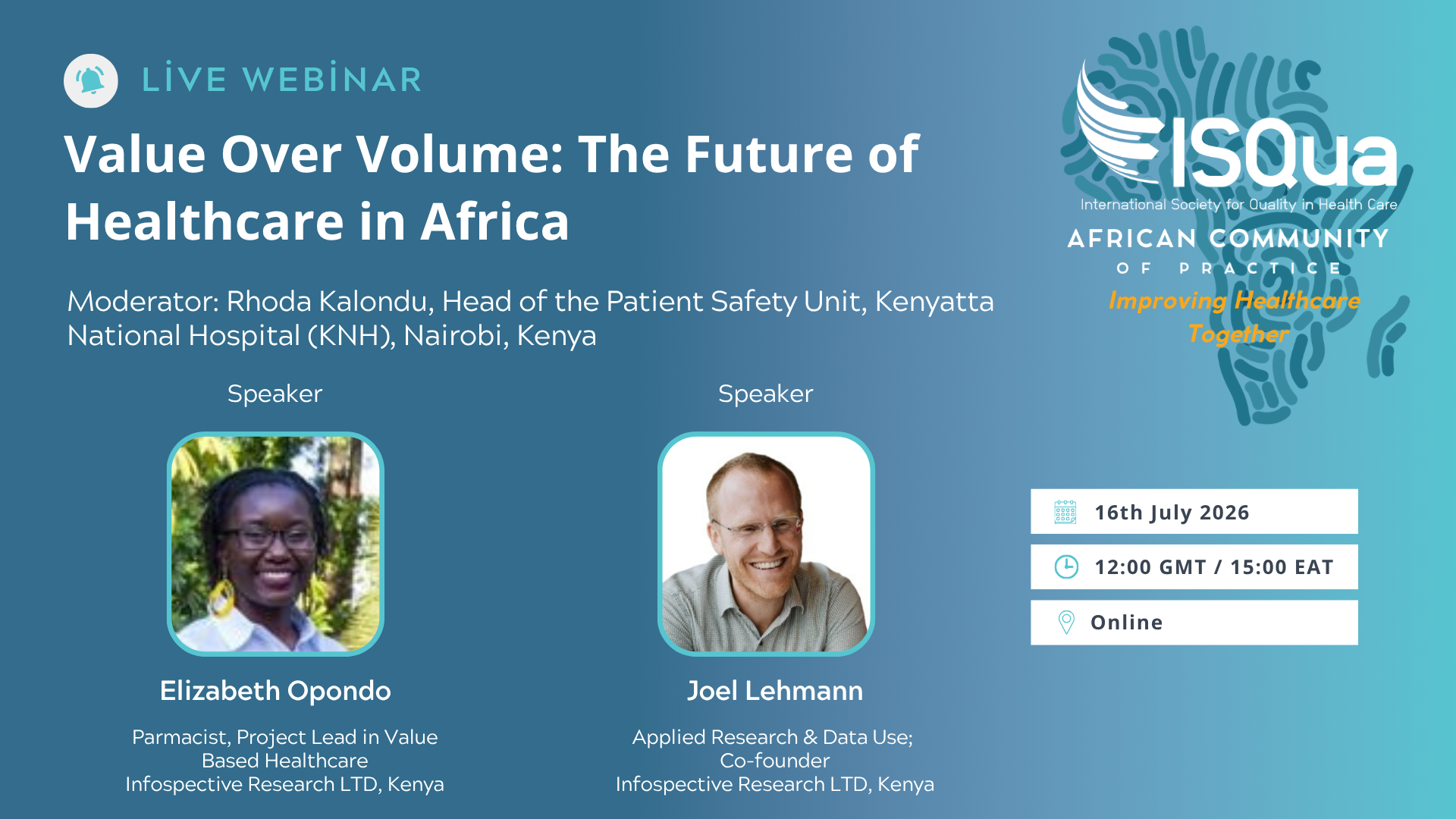
This important issue was explored in a recent webinar hosted by ISQua, bringing together healthcare quality leaders from across Africa to discuss how organisations can strengthen incident reporting, move beyond blame culture, and build safer systems for patients and staff alike.
The panel featured perspectives from hospitals and healthcare groups across East, West and Southern Africa, with speakers sharing practical experiences from their own patient safety journeys. Despite differences in geography and healthcare systems, a remarkably consistent message emerged: building a just culture depends on leadership, trust, transparency, and continuous learning.
Moving Beyond Blame Culture
A central theme throughout the discussion was the importance of shifting from blame-focused responses to system-focused learning.
Several panelists reflected on how healthcare organisations often instinctively focus on the individual closest to an incident, rather than examining the broader system factors that may have contributed to harm. Speakers stressed that most incidents arise from weaknesses in systems, processes, communication or oversight — not from intentional wrongdoing.
One panelist shared an example involving expired medication being dispensed to patients. Rather than immediately disciplining the staff member involved, the organisation investigated the wider process and discovered flaws in how medication expiry checks were being conducted. The incident ultimately became the basis for a quality improvement project aimed at preventing recurrence.
This approach, speakers argued, helps organisations move from a culture of fear to one of learning.
At the same time, panelists were clear that a just culture does not eliminate accountability. Reckless behaviour, repeated unsafe practices, or intentional misconduct still require appropriate action. The challenge is finding the right balance between supporting staff and ensuring professional responsibility.
As one speaker explained, “You need to strike a balance between the system and the individual.”
Accreditation and Everyday Patient Safety
The discussion also explored how accreditation standards can support safer day-to-day clinical practice.
Panelists highlighted several areas where accreditation standards align strongly with patient safety outcomes, including:
- Infection prevention and control
- Medication management
- Patient identification
- Surgical safety
- Communication processes
- Falls prevention
Speakers emphasised that accreditation becomes meaningful when standards are embedded into routine practice and supported by measurable indicators, monitoring systems, and continuous review.
Several participants noted that patient safety goals had become central operational measures within their organisations, used not simply for compliance, but as practical tools for improving care delivery and reducing preventable harm.
The Role of Leadership
Leadership emerged as one of the strongest recurring themes throughout the webinar.
Panelists consistently emphasised that organisational culture is shaped from the top down. When leaders visibly support reporting, encourage openness, and respond fairly to incidents, staff are far more likely to engage with patient safety processes.
Conversely, when leaders respond punitively or focus on blame, reporting quickly declines and staff become reluctant to speak openly about risks or mistakes.
Several organisations described how quality and patient safety are now standing agenda items at board, executive and departmental meetings. Others highlighted the creation of dedicated quality committees and governance structures that ensure safety concerns are escalated appropriately across the organisation. The active engagement of Boards was agreed to be critical.
One speaker reflected that leadership visibility itself is a critical intervention:
“The most dangerous culture is one where staff are afraid to speak.”
Panelists encouraged healthcare leaders to spend more time engaging directly with frontline staff through leadership walkarounds, listening exercises, and open conversations about safety concerns.
Encouraging Incident Reporting
The webinar also examined practical strategies for improving incident reporting and creating psychological safety for staff.
Some organisations have implemented anonymous reporting systems, allowing staff to report near misses or adverse events without fear of identification. Others emphasised the long-term goal of creating cultures where staff feel safe enough to report openly.
One healthcare group shared how they initially increased reporting rates by recognising and rewarding departments that reported the highest number of incidents and near misses. Importantly, this helped staff understand that reporting was viewed positively — as a contribution to improvement — rather than something that would trigger punishment.
Panelists repeatedly stressed the importance of feedback. Staff are more likely to report incidents when they can see that concerns are acknowledged, investigated, and lead to visible changes.
As one participant noted, reporting without action quickly erodes trust.
Supporting “Second Victims”
Another powerful area of discussion focused on supporting healthcare workers involved in serious adverse events — often referred to as “second victims.”
Speakers acknowledged the emotional impact that incidents can have on staff, including feelings of guilt, isolation, anxiety and loss of confidence.
Several organisations described the systems they have put in place to support staff after incidents, including:
- Access to counselling and clinical psychologists
- Occupational health support
- Peer support mechanisms
- Time away from clinical areas when needed
- Clear separation between investigation processes and emotional support
Panelists stressed that staff involved in incidents need reassurance, compassion and structured support, regardless of the outcome of investigations.
Building a Sustainable Safety Culture
In the final part of the webinar, panelists reflected on what meaningful progress would look like in the years ahead.
Their answers focused less on compliance metrics and more on cultural change:
- Staff confidently correcting one another in practice
- Higher rates of near-miss reporting
- Increased trust in leadership
- Greater psychological safety
- Reduced recurrence of serious incidents
- Improved patient outcomes
When asked what organisations could do immediately to strengthen a learning and just culture, the recommendations were practical and achievable:
- Increase leadership visibility
- Listen actively to staff concerns
- Demonstrate that reports lead to action
- Build trust through transparency
- Create safe spaces for speaking up
- Reinforce that patient safety is everyone’s responsibility
A Shared Message Across Regions
Perhaps one of the most striking aspects of the discussion was the consistency of the message across countries and healthcare systems.
Whether speaking from Southern, Eastern or Western Africa, panelists described many of the same challenges — fear of blame, barriers to reporting, leadership engagement, and balancing accountability with learning. They also shared many of the same aspirations: safer care, stronger systems, and cultures where staff and patients alike feel protected.
The conversation served as a reminder that building a just culture is not a single policy or initiative. It is an ongoing organisational commitment that requires trust, leadership, openness, and continuous learning.
As healthcare systems worldwide continue to strengthen quality and patient safety efforts, these shared experiences offer valuable lessons for organisations everywhere.
To learn more about AfCOP and upcoming webinars, visit ISQua’s Africa Community of Practice page.
A recording of this webinar is available in the Resource Section of ISQua’s Community Dashboard. This resource can be accessed by ISQua Members or Guests.
To find out more about ISQua Membership, and to sign up, please visit – https://isqua.org/membership/