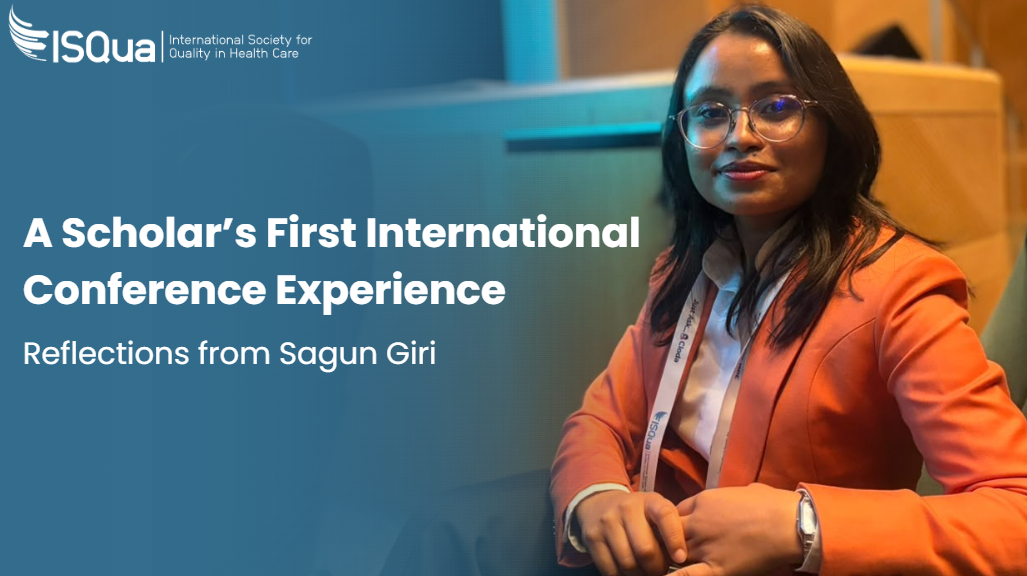
From Hesitation to Hope
By Sagun Giri
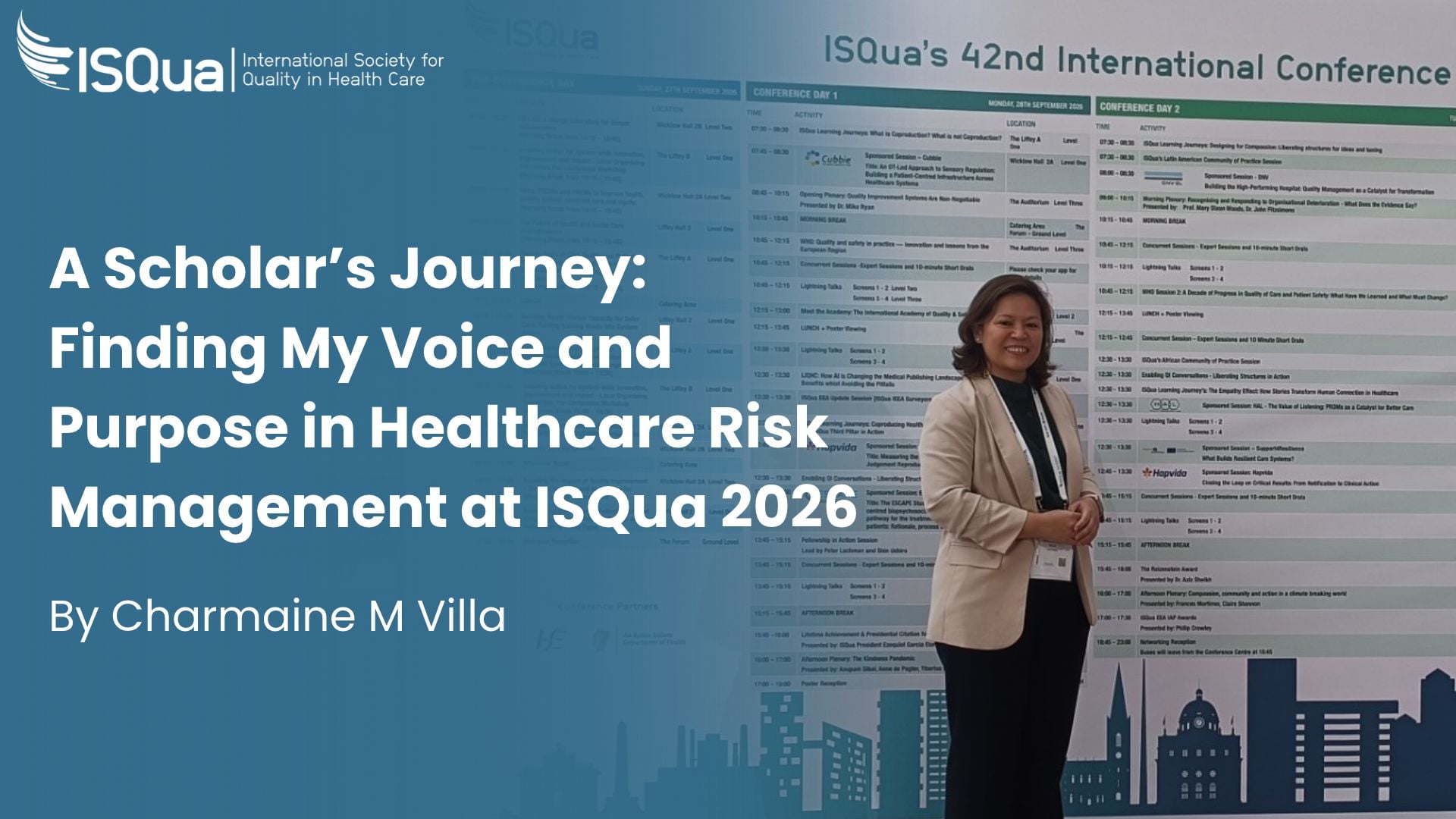
Attending ISQua’s 42nd International Conference in Dublin was a truly memorable experience. As a scholarship recipient, I am deeply grateful to ISQua and the entire team for making this opportunity possible.
As this was my first international conference, I initially felt shy and apprehensive, wondering how I would fit in among experienced healthcare professionals from around the world. Coming from Nepal, where healthcare quality and patient safety continue to evolve, I was eager to learn, gain new perspectives, and discover how I could contribute.
Over the course of the conference, that uncertainty gradually gave way to confidence and inspiration. Meeting fellow scholars and connecting with professionals helped me realise that we all have something valuable to learn and contribute, regardless of our backgrounds or experience. The connections I made in Dublin have given me a professional community I can turn to for advice and guidance, and knowing I have people to lean on when encountering new challenges makes this experience even more valuable.
Co-Production and Psychological Safety in Healthcare
One of my key takeaways was the importance of co-production in healthcare. Before attending ISQua, the term “co-production” was entirely new to me, as active patient involvement in decision-making is not yet widely practiced in Nepal.
Learning about co-production completely shifted my perspective: patients should be active partners in shaping their care, allowing their lived experiences and perspectives to directly inform clinical decisions and service improvements. This reinforced my belief that patient-centred care must extend beyond words to meaningful involvement, active listening, and genuine collaboration.
Another session that deeply resonated with me was “Breaking the Silence: Embedding Psychological Safety, Speak Up Culture, and Civility in Healthcare,” presented by Ms. Pang Nguk Lan and Prof. Kok Hian Tan. The TeamSPEAK and TeamGRACE approaches offered practical insights into encouraging healthcare professionals to raise safety concerns while fostering kindness, respect, and psychological safety.
Thriving Through Compassion and Community
Reflecting on the healthcare landscape in Nepal, I recognised how traditional hierarchical structures can make speaking up about unsafe practices feel daunting. This left me with an important question:
How can we create a culture where speaking up for patient safety is seen not as challenging authority, but as a shared responsibility?
I was reminded that policies and protocols alone cannot create safer systems. Leadership, compassion, mutual respect, and a genuine willingness to listen are equally essential. Building a strong patient safety culture requires an environment where concerns are welcomed, different perspectives are valued, and everyone understands their role in preventing harm.
The conference theme, “Thriving Through Compassion and Community: Sharing Stories for the Future of Health Systems,” captured what I experienced in Dublin. Bringing together people from different countries, backgrounds, and professional experiences demonstrated how sharing knowledge, challenges, and ideas can inspire meaningful improvement. It also reminded me that progress in healthcare quality and patient safety does not happen in isolation; it grows through collaboration, shared learning, and a collective commitment to better care.
Looking Ahead
I return to Nepal with new perspectives, meaningful connections, and a renewed commitment to contributing to healthcare quality and patient safety. I hope to apply these learnings in my work, share them with colleagues, and contribute to building a culture where patients are heard, healthcare professionals feel safe to speak up, and continuous improvement becomes a shared responsibility.
I am sincerely grateful to ISQua and everyone involved in the Scholarship Programme for this invaluable opportunity. As a participant in the ISQua Fellowship Programme, I am excited to continue this journey of learning, growth, and connection with the ISQua community. I look forward to the opportunities and experiences that lie ahead, and to continuing to learn from and contribute to this global community dedicated to advancing healthcare quality and patient safety.
This experience did more than broaden my knowledge; it helped me build confidence, recognise the value of professional connections, and understand that, regardless of where we begin, each of us has a role to play in shaping safer, more compassionate healthcare for the future.